
The public sector oil refining and marketing companies Indian Oil Corporation, Hindustan Petroleum Corporation and Bharat Petroleum Corporation are back on the radar of investors as their profit levels reach record highs.
The government's decision to raise fuel prices in June has scuttled the oil companies' plans to reduce their losses from retail fuel sales as consumers are buying less of premium fuels, which is more expensive than normal fuels.
Those in favour of a 15-day cycle for price adjustment argue that oil firms already have a mechanism of calculating the desired fuel prices on 1st and 16th of every month.
Petroleum Minister Murli Deora is likely to meet Finance Minister P Chidambaram later this week to seek greater compensation for oil companies, who are currently losing about Rs 450 crore (Rs 4.5 billion) a day on fuel sales. Indian Oil, Bharat Petroleum and Hindustan Petroleum are likely to see doubling of revenue loss on sale of petrol, diesel, domestic LPG and PDS kerosene to Rs 150,000 crore. The three fuel retailers together lost Rs 77,304.50 cr on fuel sale in 2007-08.
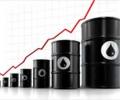
The revenue loss, termed as under-recovery by oil firms, will be the highest-ever.
State-owned Indian Oil Corp (IOC) today said it is losing Rs 189 crore per day on selling auto and cooking fuel below cost as global crude oil prices shot up to USD 102 per barrel.

Drivers of commercial vehicles, including trucks and tankers, stopped work in several states on Monday and blocked roads at some places to protest against the provision in the new penal law regarding hit-and-run accident cases involving motorists.
The government will provide private companies subsidy equivalent to that given to state retailing firms on LPG, petroleum secretary B K Chaturvedi said.
Besides IOC, Royal Dutch Shell is believed to have evinced interest in reviving the petrol pumps, industry sources said. Reliance, as part of a two part bid process, had sought expression of interest from IOC, Shell, Bharat Petroleum and Hindustan Petroleum by Friday for a possible partnership for reopening the petrol pumps.
A parliamentary panel has rapped the government for bypassing Parliament in deciding to privatise oil refiners Hindustan Petroleum Corp Ltd and Bharat Petroleum Corp
Reliance Communications Ltd's subsidiary Reliance Mobile World on Wednesday announced introduction of LPG gas booking service on mobile phones.
Steel baron Lakshmi N Mittal is eyeing to buy half of Hindustan Petroleum Corp's exploration arm Prize Petroleum for about Rs 200 crore (Rs 2 billion). Mittal, which made rapid advances in oil sphere this year first with a 49 per cent stake in HPCL's Bhatinda refinery and then partnering the state-run firm for a separate refinery on the east coast, is in talks with financial institutions to buy out their 50 per cent stake in Prize Petroleum.
Indian Oil, Bharat Petroleum, Hindustan Petroleum to open over 3,000 outlets this year. Even losses of over Rs 300 crore (Rs 3 billion) per day from selling automobile fuels have not stopped government-owned oil marketing companies from expanding their retail network across the country.
After a year of sluggish growth in fuel retail outlets, the three state-run oil-marketing companies--Indian Oil Corporation, Bharat Petroleum Corporation and Hindustan Petroleum Corporation--have chalked out aggressive plans for expansion in the next financial year. They will be commissioning over 2,100 outlets in 2009-10--over three times what they added in the current year--at an investment of about Rs 1,200 crore.
The three firms had planned to jointly buy or lease plantations and related units for producing ethanol, a by-product of sugarcane that is doped in petrol to reduce dependence on imported oil. The three firms have suffered a Rs 14,700-crore (Rs 147 billion) net loss in the first-half of the current fiscal and were living on borrowed money as they lost heavily on retail fuel sales domestically.
Many of the 37,000 petrol pumps across the country could go dry by Thursday if the indefinite strike by executives from public sector oil companies continues. Over 55,000 oil PSU officers from 14 oil companies -- under the umbrella of the Oil Sector Officers Association (OSOA) -- began their indefinite strike on Wednesday demanding higher wages.

The Centre may overshoot the Rs 56,260 crore target for dividend receipts from central public-sector enterprises (CPSEs) set for FY25 and is likely to end up getting around Rs 65,000 crore this financial year, according to a senior government official. This excludes dividend from nationalised banks and financial institutions. As on October 21, the Centre collected Rs 28,913 crore as dividend and other investment from CPSEs, accounting for over 50 per cent of the Budget Estimate for FY25.

State fuel retailers IOC, Bharat Petroleum and Hindustan Petroleum sell diesel, domestic LPG and kerosene at government dictated rates which are lower than cost of production.
The government on Wednesday broadly hinted about a hike in petrol and diesel prices, saying although it has kept retail prices unchanged it cannot do so for long given the rise in crude oil rates.

Jet fuel will cost Rs 37,300 per kl in Mumbai, home to the nation's busiest airport, from Rs 38,246.60. The reduced rates will help cash-strapped airlines cut fuel cost, which constitutes roughly 40 per cent of their operational cost.

State-owned oil firms on Tuesday cut jet fuel, or ATF, prices by 4 per cent, the first reduction in rates since July, on softening of international oil prices.
The strike by workers of state-owned oil firms Hindustan Petroleum Corp and Bharat Petroleum Corp to oppose privatisation of the cash-rich refiners entered the second day on Wednesday but operations and petroleum product supplies remained unaffected.
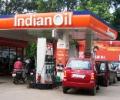
Indian Oil Corporation on Tuesday said it may lose over Rs 25,000 crore (Rs 250 billion) in revenues this fiscal on selling fuel below imported cost.
In an apparent bid to resolve the row over divestment in public sector units including the one involving HPCL and BPCL, Prime Minister Atal Bihari Vajpayee held an informal meeting of senior Cabinet ministers.\n\n

Minister of state for petroleum and natural gas Jitin Prasada in a written reply to a question in the Lok Sabha said that IOC and MRPL have been allocated 0.20 million tonnes each in 2009-10, while HPCL would offtake 0.30 million tonnes of Rajasthan crude. In 2010-11, IOC would buy 1.5 million tonnes of the crude oil from the nation's most prolific oil discovery in more than two decades, while MRPL would double its offtake to 0.40 million tonnes.
The country's oil marketing companies are preparing for another round of increase in the price of aviation turbine fuel on July 1 as the average price of the fuel in international markets has shot up to around $160 per barrel in June from $150 per barrel in May.
The oil marketing companies are driving credit growth. The banking sector -- which typically sees credit contraction in the initial months -- has managed to buck the trend and has added nearly Rs 16,000 crore (Rs 160 billion) of advances in the first seven weeks of the current financial year thanks to the demand from the two sectors.
More than one oil company bidding for same overseas assets.
Reliance Industries Ltd will sell 4.3 million tonnes of petroleum products from its 33 million tonnes Jamnagar refinery in Gujarat to public sector oil retailing companies in 2004-05.

State-owned Indian Oil Corp, Bharat Petroleum and Hindustan Petroleum are collectively losing Rs 2.65 billion (Rs 265 crore) per day on selling fuel below cost and may end the fiscal with a Rs 874.4 billion (Rs 87,440 crore) revenue loss.
